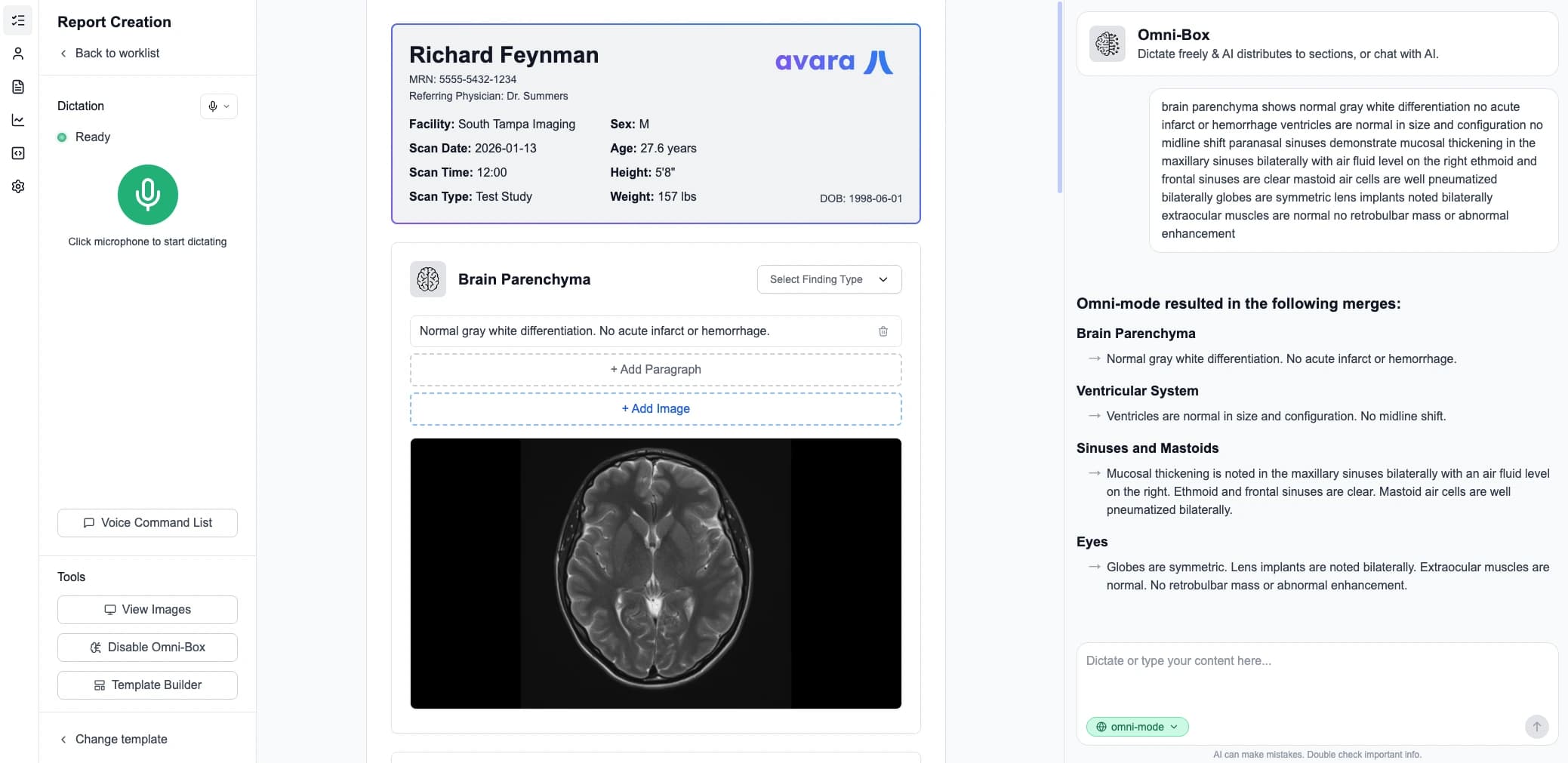
Every second counts in radiology. A radiologist reading 50 studies per day loses 25 minutes to lag at just 30 seconds per study. Over a year, that's 100 hours of pure waiting – more than two full work weeks watching progress bars.
But 30 seconds is generous. Factor in loading times, reconstruction delays, and sluggish scrolling through large series, and lag can accumulate to 2-3 minutes per study or more. At 50 studies per day, that's 2.5 hours lost daily – 12.5 hours per week, 650 hours per year. That's over 16 full work weeks of pure waiting.
This isn't about minor inconveniences. It's about workflow disruption, diagnostic accuracy, and patient throughput. When your viewer lags, you lose your train of thought. When MPR takes 5 seconds to render, you hesitate to use it. When 3D reconstructions freeze your workstation, you skip them entirely.
The problem isn't your radiologists. It's your viewer.
The Incumbent Problem: Built for 2005, Running in 2025
Most DICOM viewers were architected when 4GB of RAM was luxury hardware and streaming frame-by-frame made sense. DICOMweb protocols were designed for dial-up era constraints. Server-side rendering was necessary because browsers couldn't handle the computational load.
Twenty years later, these architectural decisions persist – not because they're optimal, but because rewriting core infrastructure is expensive and risky. FDA re-clearance adds complexity. Legacy codebases accumulate technical debt. Incumbent vendors focus on incremental features rather than fundamental reimagination.
The result? Viewers that treat modern hardware like it's still 2005.
The Framework-Agnostic Trap
Many commercial viewers built on open-source frameworks like Cornerstone or OHIF inherit a critical limitation: framework agnosticism. The code must work across React, Vue, Angular, vanilla JavaScript – any environment.
This sounds pragmatic. In practice, it prevents optimization. Framework-agnostic DICOM viewers can't leverage React's concurrent rendering. They're stuck with lowest-common-denominator implementations that work everywhere but excel nowhere.
The Metadata Dependency
Traditional viewers require metadata before rendering: study descriptions, series organization, patient demographics, image dimensions, pixel spacing. This creates integration complexity:
- Maintain a separate metadata database
- Sync DICOM headers to that database
- Handle metadata drift when studies are updated
- Debug synchronization failures
- Scale database infrastructure alongside storage
It's an entire layer of infrastructure that exists solely because the viewer can't parse DICOM files itself.
How We Eliminated the Bottleneck
When we couldn't find a modern viewer suitable for our radiology platform, we spent weeks integrating with MedDream. The loading speeds frustrated our radiologists. Interaction felt laggy.
We tried FlexView next. The documentation made integration nearly impossible. We realized something: there wasn't a single modern, zero-footprint web viewer built for 2025 workflows.
So we built one from scratch. But we didn't just build another DICOM viewer – we eliminated the architectural constraints that make traditional viewers slow.
Decision 1: React-Native Architecture
We tightly coupled our entire stack to React. Every viewport is a React component. Every tool leverages React hooks. We use useEffect and useRef to sync rendering with the browser's RequestAnimationFrame cycle, achieving hardware-level timing precision.
The result: interactions that feel instant because they're synchronized with your display's refresh cycle at the lowest possible level.
Decision 2: GPU-First Rendering
When a series loads, we don't stream frames individually. We load the entire series into a 3D texture on the GPU. This single architectural decision enables:
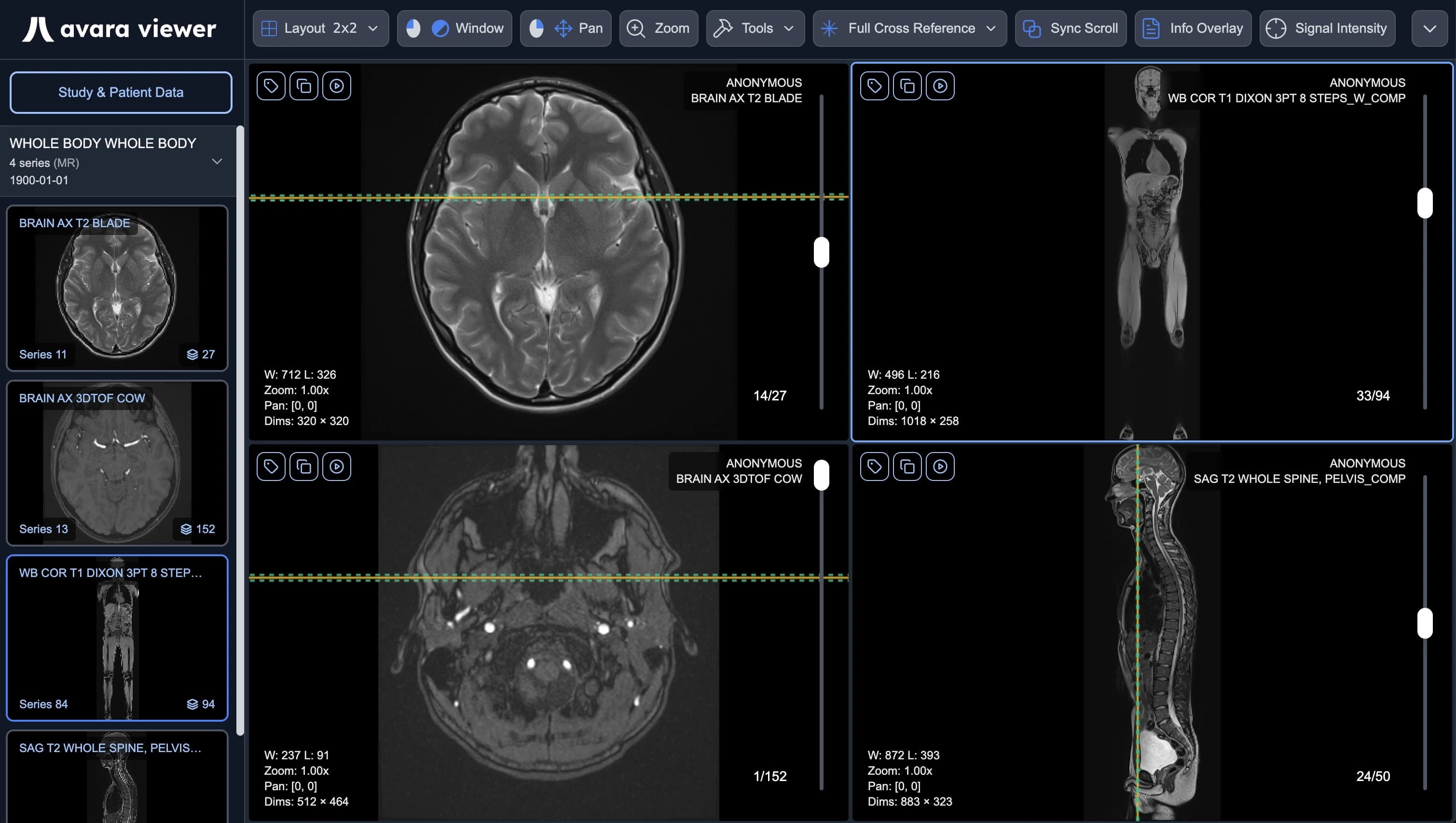
- Zero-lag scrolling through any series size
- Sub-second MPR in any plane
- Instant 3D volume rendering
- Fluid multi-viewport synchronization
Frame-by-frame streaming can't do this. Our approach loads once, renders everywhere.
Decision 3: Just-in-Time DICOM Parsing
We require zero metadata. Give us presigned URLs to DICOM files in cloud storage. That's it.
Our parser extracts everything needed – pixel data, orientation, spacing, patient info – on load. No pre-sync required. No metadata database. No drift to debug.
Here's what makes this powerful: non-blocking loading. As soon as the first series loads – often in under one second – you can start reading. Scroll through images. Apply windowing. Measure. Annotate. All while the rest of the study continues loading in the background.
Decision 4: Client-Side Everything
We eliminated server-side rendering entirely. Everything runs in the browser. This means:
- No server compute costs scaling with usage
- No network latency for rendering operations
- Presigned URLs maintain security (encryption in transit and at rest)
- Zero server-side infrastructure for viewing
Your PACS or cloud storage serves files. Our viewer renders them. That's the entire architecture.
What This Means in Practice
For Radiologists:
- MPR in any plane: <1 second
- 3D volume reconstruction: <1 second
- Fusion (PET/CT, SPECT/CT): <1 second
- Viewport cross-reference syncing: zero lag
- Series scrolling: perfectly fluid
- Tool interaction: instant feedback
- Start reading: <1 second after first series loads
No waiting. No hesitation. No workflow disruption.
For Integrators:
- Integration: under a day
- Metadata requirements: zero
- Infrastructure complexity: minimal
- Maintenance burden: near zero
- Cost per study: $0.25 (or free for FDA-cleared basic tier)
Comprehensive API documentation with modern SDKs. Support for temporary access viewing sessions. Multi-tenant architecture via Avara Express.
For Practices:
Our viewer integrates seamlessly into our AutoScribe dictation platform or Clinical Platform for free, or runs standalone. Full mammography and tomosynthesis support. Customizable hanging protocols. Complete measurement and annotation toolkit.
FDA-cleared. HIPAA compliant. Built for production radiology workflows.
The Numbers That Matter
We don't have formal benchmarks comparing our viewer to competitors millisecond-by-millisecond. We don't need them.
Put them side by side. The difference isn't subtle. It's immediately, viscerally obvious.
When radiologists switch from their previous viewer to ours, the most common response is relief. Not "this is 20% faster" but "I didn't realize how much the lag was bothering me until it disappeared".
That's the goal. Not marginal improvement. Elimination of the bottleneck entirely.
Try It Yourself
We built a public demo so you can experience the difference firsthand:
- Test the Viewer Now – Load any DICOM study and see sub-second 3D/MPR/fusion for yourself.
- Read the Documentation – Modern API references with integration examples.
- Get Started Today – Free tier available. No credit card required.
- Contact Sales – Enterprise deployments, multi-tenant architecture, custom integration support.
The Bottom Line
The viewer shouldn't be the bottleneck in your radiology workflow. Every second of lag multiplies across thousands of studies. Every delayed reconstruction is a diagnostic tool you're less likely to use.
Modern hardware can deliver instant interaction, sub-second reconstructions, and zero-lag workflows. The technology exists. The question is whether your viewer leverages it.
We built Avara Viewer because radiologists deserve better than waiting for technology from 2005. The tools exist to eliminate lag entirely. We just had to build them.